Declutter · 6 min read
7 Reasons Your Home Keeps Getting Messy Again (And the Small Fix That Finally Makes It Stick)
Weekend purges, matching bins and saved tidying videos all fail for the same reason. Once you see it, you can't unsee it.

You know the feeling. You walk into the kitchen to make a cup of tea and there it is: the mail, the chargers, the school forms, the bag you meant to take back to the shop.
So you promise yourself: this weekend, I'm sorting it all out.
Maybe you even do. For a while it looks better. Then, slowly, the piles come back. The chair fills up again. The spare room door goes back to being shut.
If that's happened to you more than once, here's the good news. It's not you. It's the way you've been told to declutter. Here are the 7 reasons it keeps going wrong, and what to do instead.
1You're trying to fix the whole house at once
"Sort out the house" isn't a task. It's hundreds of tiny decisions dressed up as one job. Your brain looks at it, sees no finish line, and quietly finds something else to do.
That's not laziness. It's how everyone's brain works when a goal is too big and too vague.
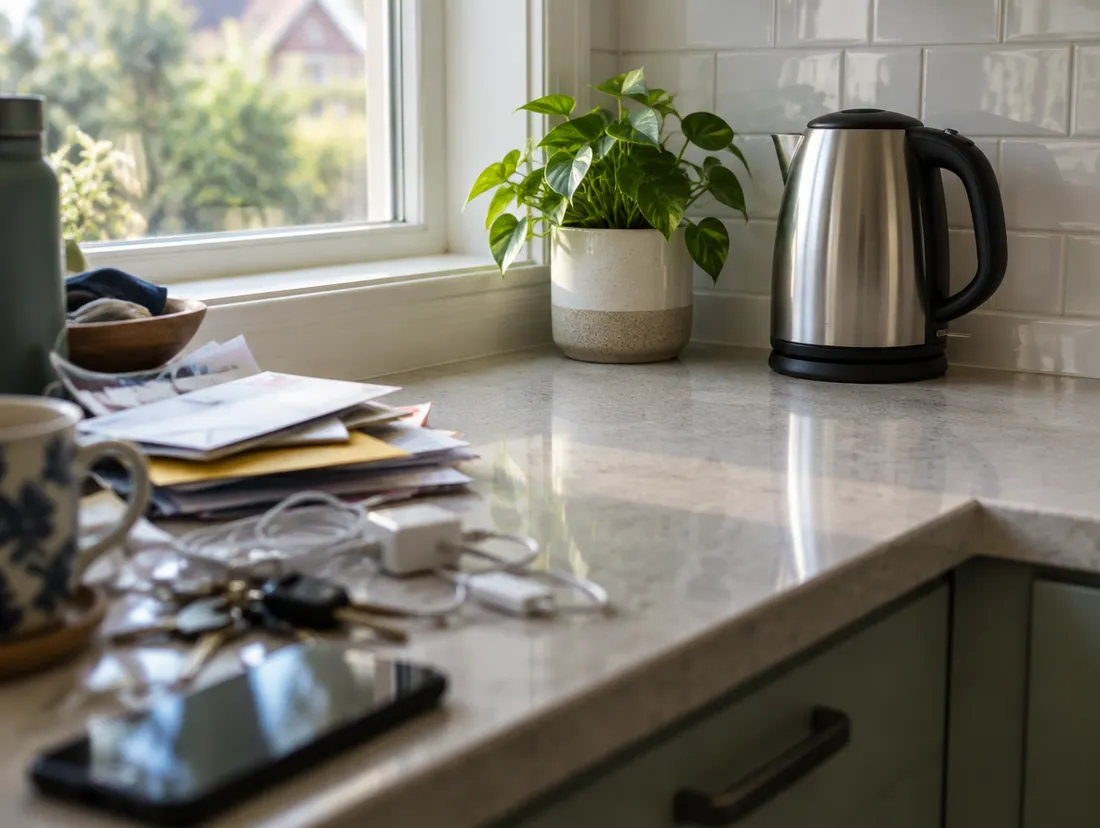
What works instead: one small, specific zone. Not "the kitchen." The two feet of counter next to the kettle. Something you can finish in 15 minutes.
2The big weekend purge burns you out
Everything comes out of the cupboards on Saturday morning. By Saturday afternoon you're surrounded by piles, exhausted, and the house looks worse than when you started.
Sunday, you shove most of it back. And now "decluttering" is linked in your head with a horrible weekend, so you avoid it for months.

What works instead: 15 to 30 minutes, then stop, even if you feel like carrying on. Stopping while it still feels easy is what makes you want to come back tomorrow.
3You bought bins before you decided what to keep
New baskets feel like progress. They look great in the shop. But you can't organise clutter. You just end up with tidier piles of things you don't use.
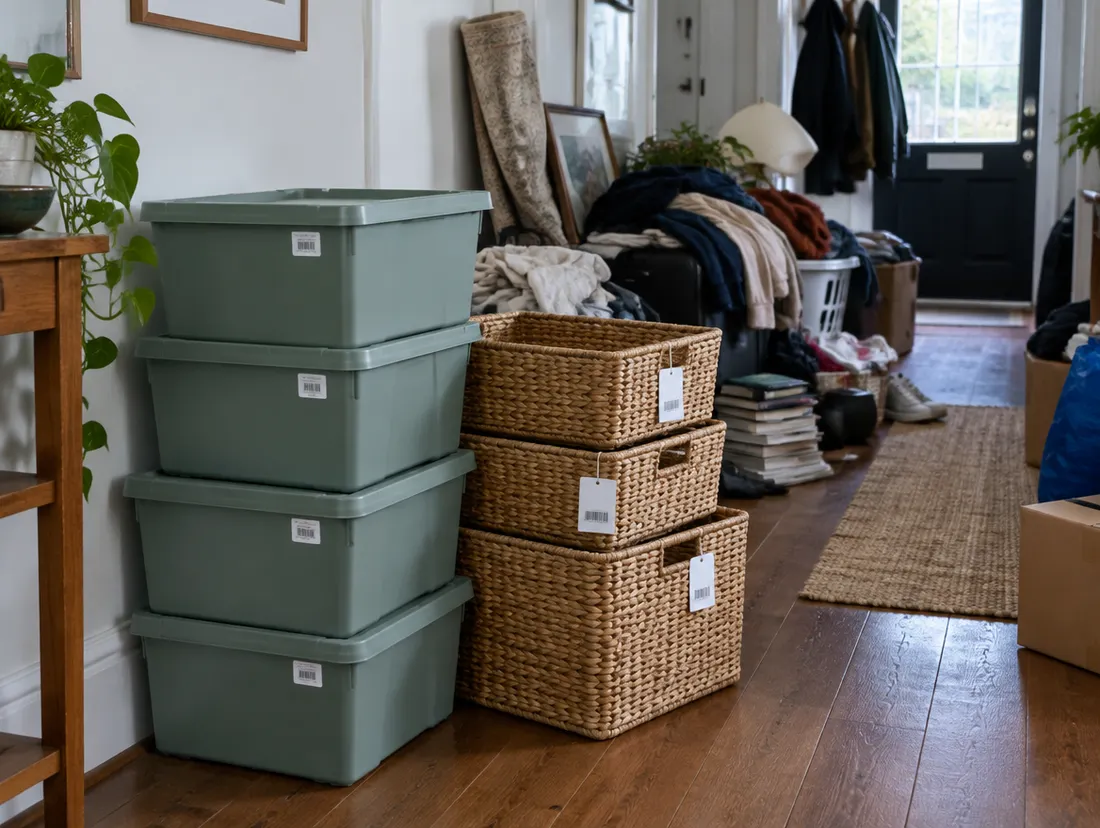
What works instead: decide first, store second. Clear a zone, keep what you use, and only then work out where it lives.
4Every item turns into a 5-minute debate
"What if I need it?" "It was a gift." "It cost good money." Three items in, you're tired, and you haven't made a single decision.
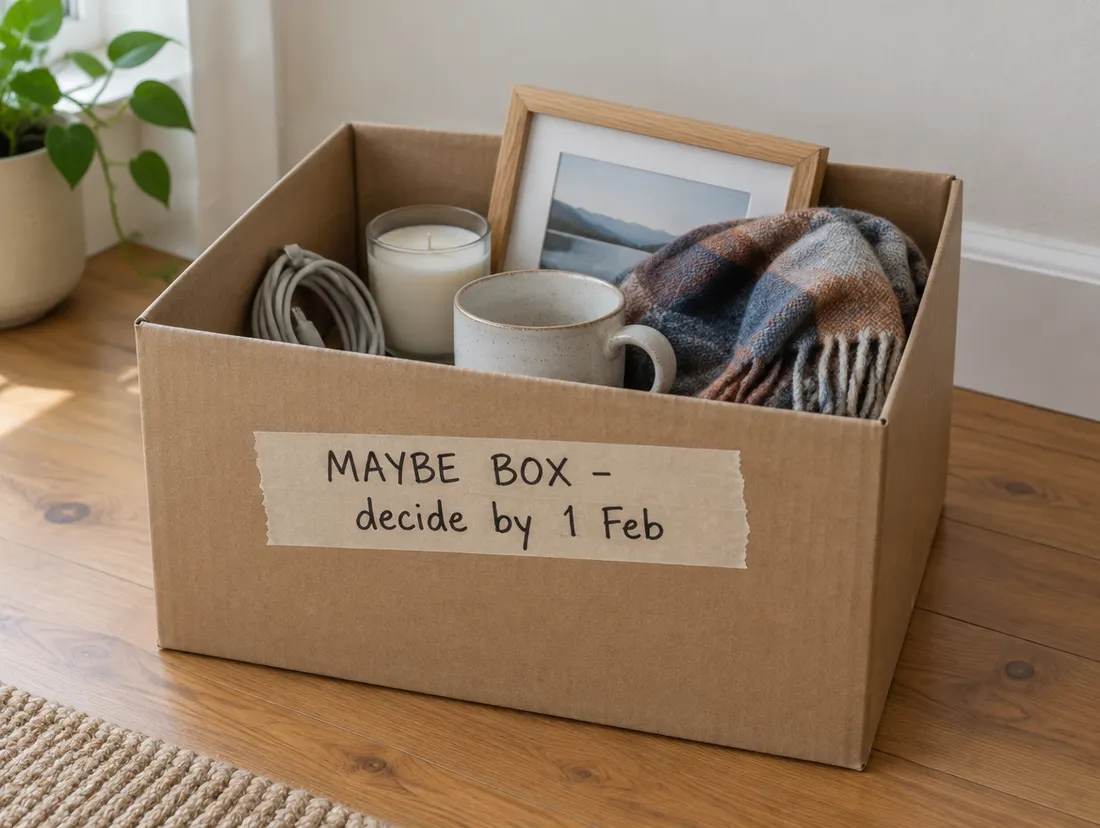
What works instead: two simple tools. A No-Regret Toss list of things almost nobody misses (expired, broken, duplicates, packaging). And a Maybe Box: anything you're unsure about goes in, gets a date on it, and leaves the room. If you haven't needed it by the date, it goes. No agonising.
5You started with the hardest room
The garage. The loft. The cupboard where everything goes to hide. You open the door, feel your heart sink, and shut it again. That one moment can cost you a month of motivation.
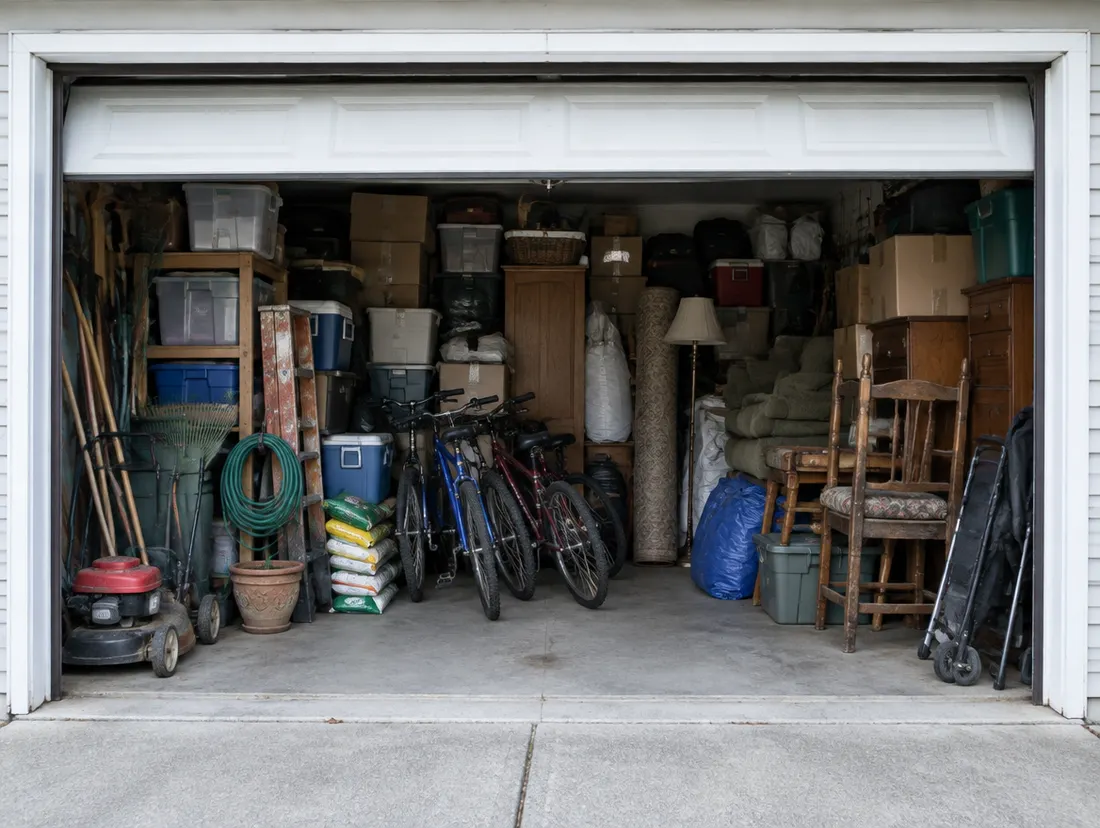
What works instead: start with the spot that bothers you most and is easiest to win. A visible, quick win gives you the relief, and the energy, to tackle the harder places later.
A finished small reset beats an unfinished whole-house plan. Every time.
6Nothing stops the mess coming back
Most decluttering advice ends on the day you clear the room. But mess isn't a one-off event. It's a daily flow of stuff coming into the house.
What works instead: a short daily loop. Ten minutes in the evening to put the day's things back where they live. It's the difference between a home that's tidy once and a home that stays easy to reset.

7You've been watching instead of doing

Hundreds of saved videos. Lovely before-and-afters. A head full of tips. And the same chair, still full.
Watching feels like progress, but your house only changes when something physically moves. What most people are missing isn't more tips. It's a simple plan that tells them exactly what to do today, and when to stop.
So what actually works?
Put the 7 fixes together and you get a very different way of decluttering:
The 30-Minute Reset Method
- Day 1: pick your Day-One Calm Zone, the spot that bothers you most and is easiest to win.
- One small zone a day, 15 to 30 minutes, then stop.
- No-Regret Toss + Maybe Box, so you never get stuck on a decision.
- A 10-Minute Maintenance Loop so the mess doesn't creep back.
That's the idea behind The Tidy Reset, a simple 7-day plan built by the team behind this article. Each day has one short lesson, one small zone and a clear point to stop.
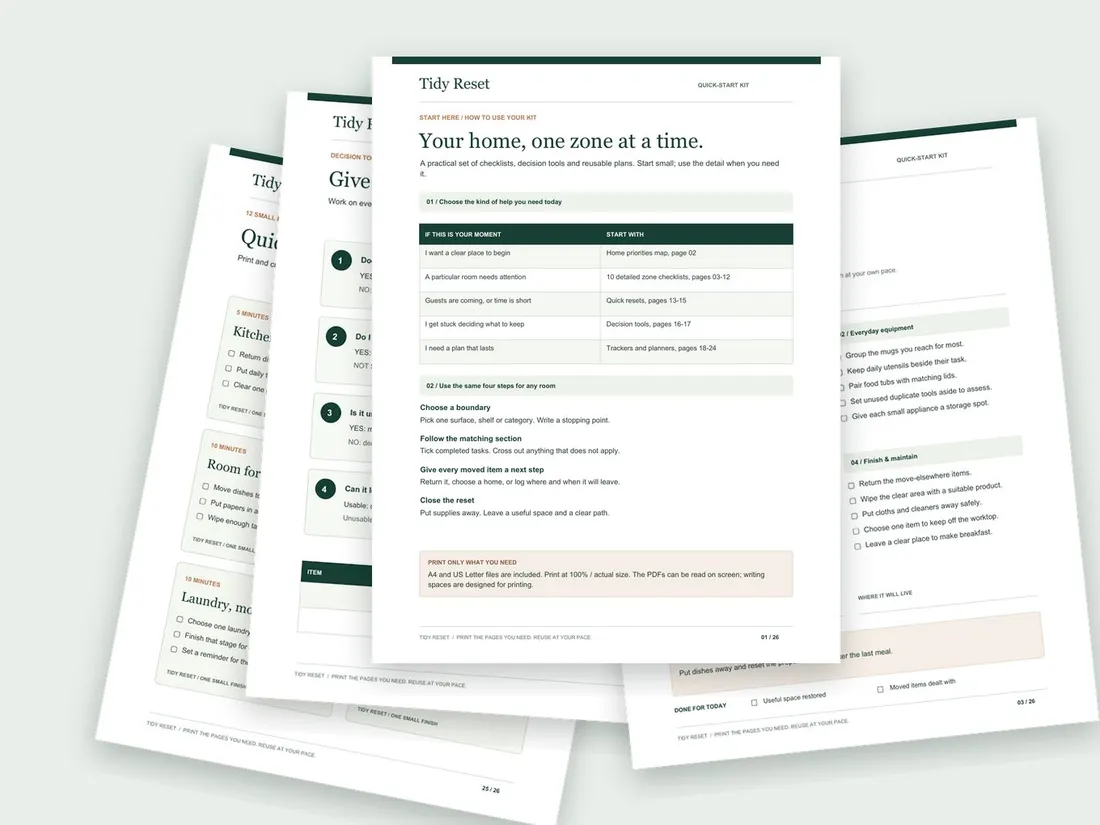
Here's what's inside:
- 7 short lessons (15 to 30 minutes a day), each with a printable worksheet
- A 26-page Quick-Start Kit: room checklists, decision tools, planners and reset cards, in US Letter and A4
- The Audio Companion: every lesson as audio, plus 3 guided resets to play while you work
- Bonus: the 30-Minute Guest-Ready Reset for when someone texts "on my way!"
It all lives in a simple members' area that works on your phone, tablet or computer, so you can start tonight. It's one payment, no subscription.
And it comes with a 30-day "calmer home or it's free" guarantee. If your home doesn't feel calmer and easier to manage, you email the team within 30 days for a full refund, and you keep everything.
The Tidy Reset is new. Rather than make big promises, they show you exactly what's inside, including a sample audio lesson, on the next page. Have a look and decide for yourself.
See what's inside The Tidy Reset →7 days · 15 to 30 minutes a day · 30-day money-back guaranteeTakes you to tidyreset.com
Whatever you decide, try reason #1 tonight: pick one small spot, set a timer for 15 minutes, and stop when it rings. You might be surprised how good it feels.